Bubble Letters
A circle of letters appears in Bubble Letters, and the objective is to build words with them. Finishing a level is like completing a mental jigsaw puzzle.
A Secret Map Revealed Only Through Connections
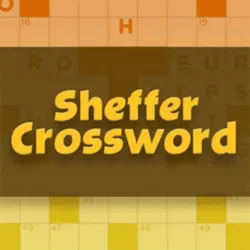
The screen is split in two from the very start. On the left lies an empty crossword grid; on the right, a circle containing the alphabet, waiting to be connected. You drag lines to form words and fill in the missing squares. Each line you draw is not merely a mechanical action but a hypothesis regarding the existence of a specific word. When a word appears correctly and fits the crossword, the empty squares are filled, unlocking the path to the next level. Difficulty increases not by adding or removing letters, but by demanding tighter logical reasoning between the two halves of the screen. The game transforms word-finding into an exploratory drag-and-drop experience.
Difficulty Rises Through Tight Connections
The initial levels might require only short words and simple connections. As you progress, the crossword demands longer words and more complex structures, while the letter circle forces you to create combinations few would immediately consider. Bubble Letters doesn't ramp up difficulty by hiding letters or imposing time limits; instead, it challenges your logic to work harder across the split screen. A single correct letter in one spot can unlock possibilities for three other words. Conversely, a wrong connection can derail your entire train of thought. Skilled players develop the habit of looking ahead before making a move. The game turns puzzle-solving into an exercise in associative thinking that never feels dry or tedious.
Swiping And Dragging—The Only Language Bubble Letters Speaks
There is no virtual keyboard. There are no typing buttons; instead, you simply swipe or click-and-drag along a circle. Each stroke acts as a query to the system: "Does this word exist, and does it fit the crossword?" The mechanics are simple enough for children to grasp, yet the underlying logic offers enough depth to engage adults who enjoy a mental challenge. On a mobile phone, the tactile sensation of swiping across the letters creates a highly intuitive experience, while on a computer, the mouse serves as the pen for tracing words.
Challenging Puzzles