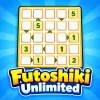
Futoshiki Unlimited
INEQUALITY SIGNS SHAPE THE GRID
Futoshiki Unlimited uses inequality signs to define where each number can go. Fill every row and column with the numbers from 1 up to the size of the board, using each number exactly once. Each < or > sign must be true, with the sign always pointing toward the smaller value. Unlike a box-based number puzzle, the deductions come from comparing cells across rows and columns.
Following Longer Sign Chains
A chain of rising or falling signs narrows the possible values at both ends. For example, three cells rising in sequence establish a minimum value for the final cell and a maximum for the first. Futoshiki Unlimited uses boards from 4x4 through 9x9 in Easy, Normal, and Hard difficulty levels. Larger boards and harder levels require comparisons between pairs and triples of cells.
WHY EVERY BOARD HAS ONE ANSWER
Each board has exactly one solution and is checked to ensure it can be completed through reasoning. A board that requires guessing is removed before it is offered. In Futoshiki Unlimited, an edge without a sign does not set a condition between its two cells, while a signed edge creates a direct numerical relationship.
Enter Numbers and Notes
Tap a cell and choose a number to enter it, then tap the same number again to clear it. Use Notes to add pencil marks for cells with several candidates. Arrow keys move between cells, keys 1 through 9 write numbers, and 0 or Backspace clears an entry. Press N for Notes, H for a hint, and Ctrl+Z to undo a move.
HINTS AND BOARD MODES
Hints explain the next deduction rather than only filling a cell. Daily, Weekly, and Monthly boards are generated from the date, while Unlimited mode provides additional boards. When you are ready, map the next inequality in Futoshiki Unlimited.
KEEP PLAYING